

If you're teaching in Korea in 2026, you picked a good year to be here. The calendar is loaded with long weekends, and a couple of holidays that hadn't been days off in years just came back. Below is everything you actually need to plan your trips, your lessons, and your time off around — written for teachers, not for bureaucrats.
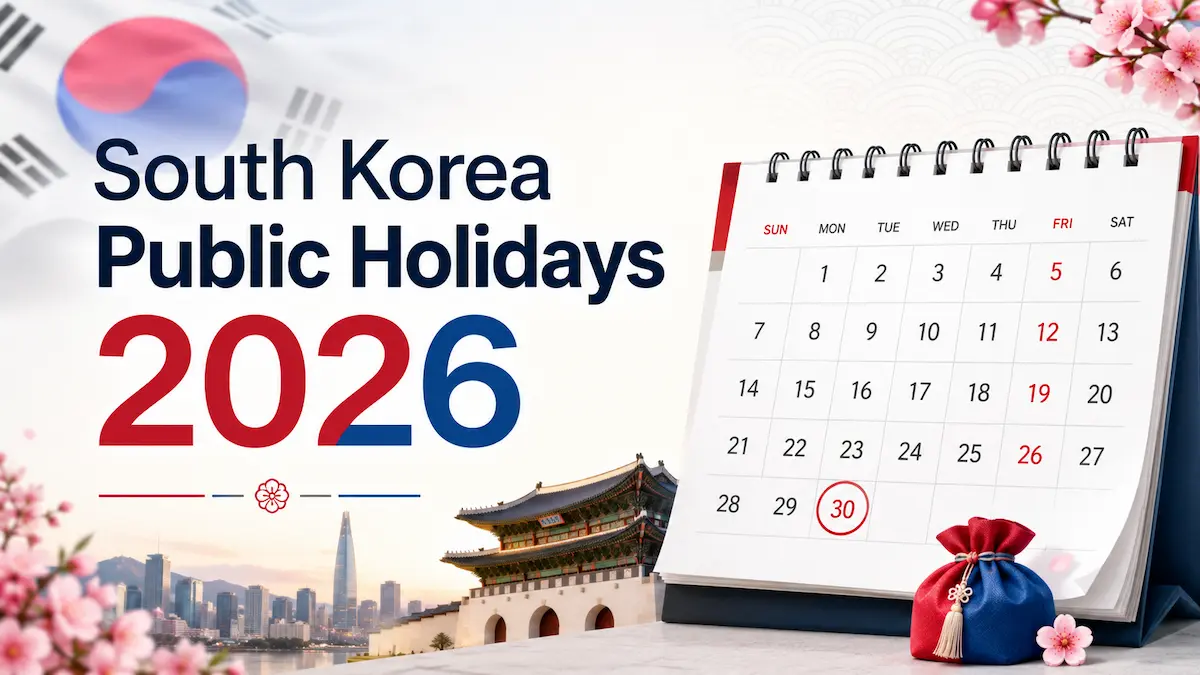
The short version: South Korea gives you more than a dozen public holidays in 2026, four substitute Mondays (March 2, May 25, August 17, October 5), and eight-plus long weekends. Two holidays returned to the calendar this year — Labor Day (May 1) and Constitution Day (July 17) — and the two giants, Seollal (Feb 16–18) and Chuseok (Sep 24–26), are when the whole country travels at once.
What's new in 2026 (read this part first)
Two changes will matter even if you've taught here before:
- Constitution Day (제헌절, July 17) is a red day again. It was dropped back in 2008 and sat as a normal workday for 18 years. South Korea's National Assembly voted it back in January 2026, so July 17 is officially a public holiday this year. It lands on a Friday, which gives you a clean three-day weekend in the middle of summer — rare, because July usually has nothing.
- Labor Day (노동절, May 1) is now an official public holiday. It was always a paid day off for most employees under the Labor Standards Act, but it wasn't a "government" holiday and a lot of hagwons treated it as optional. As of 2026 it's both. May 1 is a Friday, so it stretches the start of May into a long weekend.
There's also a one-off: June 3 (Wednesday) is a temporary holiday for South Korea's nationwide local elections. It's a single midweek day, but burn a vacation day on either side and you've got yourself a four- or five-day break out of nowhere.
South Korea's 2026 public holidays at a glance
| Date | Day | Holiday |
|---|---|---|
| Jan 1 | Thu | New Year's Day |
| Feb 16–18 | Mon–Wed | Seollal (Lunar New Year) |
| Mar 1 → Mar 2 | Sun → Mon | Independence Movement Day (+ substitute) |
| May 1 | Fri | Labor Day (new public holiday) |
| May 5 | Tue | Children's Day |
| May 24 → May 25 | Sun → Mon | Buddha's Birthday (+ substitute) |
| Jun 3 | Wed | Local Election Day (temporary) |
| Jun 6 | Sat | Memorial Day (no substitute) |
| Jul 17 | Fri | Constitution Day (back after 18 years) |
| Aug 15 → Aug 17 | Sat → Mon | Liberation Day (+ substitute) |
| Sep 24–26 | Thu–Sat | Chuseok (Korean Thanksgiving) |
| Oct 3 → Oct 5 | Sat → Mon | National Foundation Day (+ substitute) |
| Oct 9 | Fri | Hangeul Day |
| Dec 25 | Fri | Christmas |
Counting weekends and substitute days, that's around 70 days off over the year — a few more than 2025, mostly thanks to the two holidays that came back. But the number isn't the point. The point is how they fall, and 2026 falls well.
Month by month, with the teacher notes that actually matter
January — New Year's Day (Jan 1, Thu)
New Year's Day 2026 is a single holiday on Thursday, January 1. Public schools close; hagwons are a coin flip depending on the owner. Nothing dramatic — most people use it to recover from December. If you want the long version, take Jan 2 (Fri) off and you've got four days.
February — Seollal (Feb 16–18, Mon–Wed)
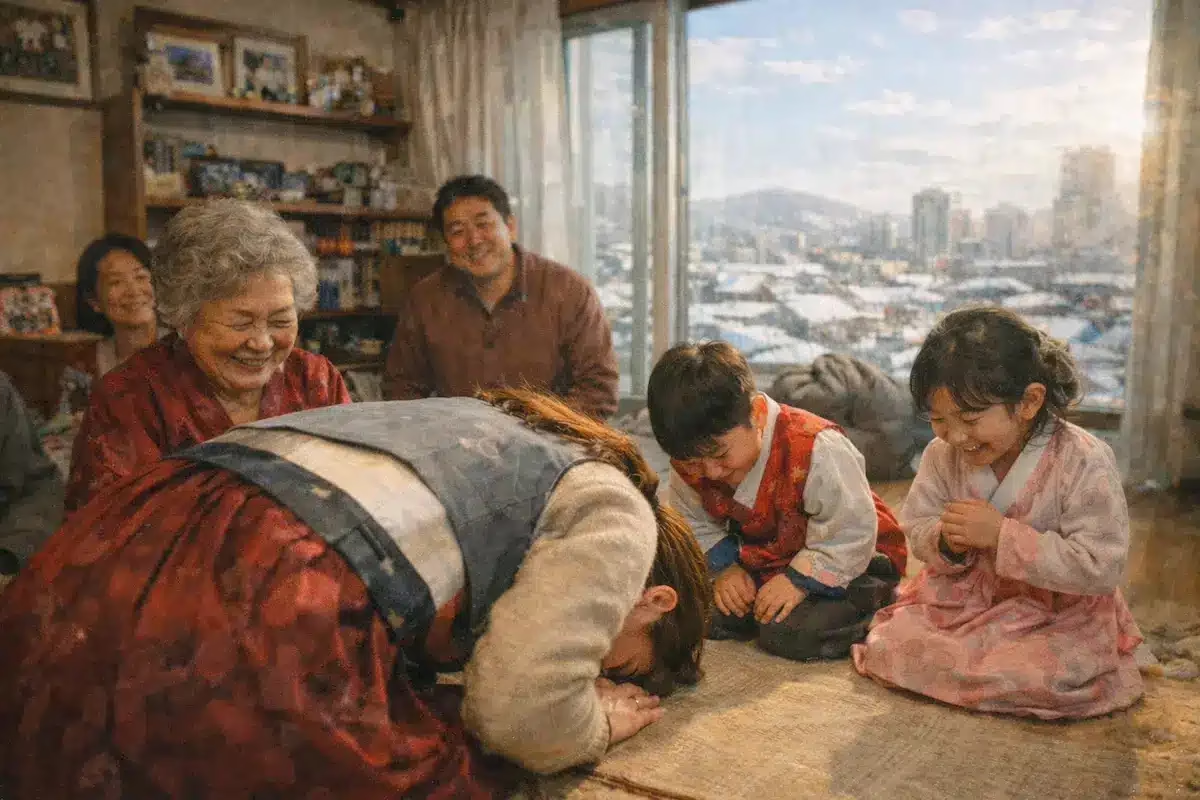
Seollal 2026 runs February 16–18 (Monday to Wednesday), with the actual Lunar New Year falling on Tuesday the 17th. This is one of the two biggest holidays of the year — families travel home, and the whole country moves at once. With the weekend before it, you're realistically looking at five days off (Feb 14–18). A lot of small neighborhood places close, though convenience stores and big chains stay open. If you're flying out or grabbing a KTX seat, book it the day tickets open, not the week before. Staying put is also completely fine; Seoul empties out and gets weirdly peaceful.
March — Independence Movement Day (Mar 1, Sun → Mar 2 substitute)
March 1 falls on a Sunday this year, so Monday March 2 becomes the day off and you get a three-day weekend to open the new semester. It marks the 1919 movement against Japanese colonial rule — a serious day, not a party day. Good window for a short trip before the spring rush.
May — the busy one
Labor Day (May 1, Fri) kicks it off, now that it's officially a public holiday. As an employee you're generally entitled to it as a paid day off, but some hagwons still run classes that day, so confirm with your school rather than assuming.
Children's Day (May 5, Tue) is the one hagwons almost always close for — the kids are off and the parents are off, so there's nobody to teach. Buddha's Birthday (May 24, Sun → May 25 substitute) rounds out the month with another three-day weekend. If lantern festivals are happening near you in the weeks around it, they're worth catching.
June — Election Day (Jun 3, Wed) + Memorial Day (Jun 6, Sat)
June 3 is a bonus midweek day off for the local elections. June 6 (Memorial Day) lands on a Saturday this year, and Memorial Day doesn't get a substitute — so it quietly disappears into the weekend. The move here is the election day: a couple of vacation days around June 3 turns a random Wednesday into a real break.
July — Constitution Day (Jul 17, Fri)
The new one. Constitution Day returns as a public holiday on Friday, July 17 — its first time as a day off since 2008. July usually has zero holidays, so this is a genuine gift: a three-day weekend right when the weather's good for the coast — Sokcho, Gangneung, Busan beaches.
August — Liberation Day (Aug 15, Sat → Aug 17 substitute)
Liberation Day marks Korea's 1945 freedom from Japanese rule. It's on a Saturday this year, so Monday August 17 becomes the day off and you get three days. Peak summer, peak heat — plan around the humidity if you're heading outdoors.
September — Chuseok (Sep 24–26, Thu–Sat)
Chuseok 2026 runs September 24–26 (Thursday to Saturday) — basically Korean Thanksgiving, and the other huge family holiday. Heads up: because the last day (Sep 26) lands on a Saturday, there's no extra substitute Monday this year — don't pencil in Sep 28. But the Sunday (Sep 27) butts right up against it, so it still plays like a four-day stretch. Same drill as Seollal: book early, expect crowds, or take advantage of a half-empty city. What the holiday actually involves — the food, the ancestral rites, and how academies usually handle the week — is covered in our guide to Chuseok in Korea.
October — Foundation Day + Hangeul Day
National Foundation Day (Oct 3, Sat → Oct 5 substitute) gives you a three-day weekend, then Hangeul Day (Oct 9, Fri) gives you another one a few days later. October is one of the best months to be in Korea anyway — the weather is perfect. If you can take Oct 6–8 off, you can chain the whole thing into a long break worth flying somewhere for.
December — Christmas (Dec 25, Fri)
Christmas is a single holiday on Friday, December 25, so it's a three-day weekend to close the year. Christmas in Korea is more of a couples-and-friends thing than a family thing — hagwons sometimes run a themed lesson instead of closing, so check your schedule. Markets and lights are everywhere in Seoul if you want the festive version.
How to actually use these days
- Book Seollal and Chuseok travel the minute tickets open. KTX seats on the popular routes are gone in minutes, and Jeju flights fill up fast. This is the one thing people consistently get wrong in their first year.
- Stack the Fridays. Labor Day, Constitution Day, Hangeul Day, and Christmas all land on Fridays — those are your easy three-day weekends with zero vacation days spent.
- Use October for the real trip. Two long weekends close together plus good weather makes it the best window for Southeast Asia or Japan.
- You don't have to travel. During Seollal and Chuseok the cities clear out. A long weekend in a quiet Seoul, with everything you usually queue for suddenly empty, is its own kind of holiday.
A word on your contract
Public school teachers follow the official calendar pretty closely. Hagwons are where it varies. Most close for the big stuff — Seollal, Chuseok, Children's Day — but the one-day holidays and the new ones (Labor Day especially) depend on the owner. Workplaces with five or more employees are generally required to give public holidays as paid leave, but it's not worth a surprise: ask your director early which days you're actually off, and get it in writing if you can. It saves an awkward conversation in May.
Dates can also shift — the government occasionally adds a temporary holiday, and substitute rules get tweaked. If something looks off close to the date, check korea.go.kr or Naver before you commit to plans.
Frequently asked questions
When is Seollal in 2026?
Seollal (Korean Lunar New Year) 2026 is February 16–18, Monday to Wednesday, with the actual New Year's Day on Tuesday, February 17. Combined with the weekend before, most people get five days off from February 14 to 18.
When is Chuseok in 2026?
Chuseok 2026 is September 24–26, Thursday to Saturday, with the main day on Friday, September 25. There is no substitute Monday because the holiday's last day falls on a Saturday, but the following Sunday (Sep 27) extends it into a four-day stretch.
Which new holidays were added in South Korea for 2026?
Two. Constitution Day (July 17) returned as a public holiday for the first time since 2008, and Labor Day (May 1) was made an official public holiday. A one-off temporary holiday also applies on June 3 for the nationwide local elections.
Is there a substitute holiday for Chuseok 2026?
No. In 2026 the Chuseok holiday ends on Saturday, September 26, and Korea's substitute-holiday rule only adds a Monday when one of the Seollal or Chuseok days lands on a Sunday. So September 28 is a normal workday.
Are hagwons closed on Korean public holidays?
Usually for the big ones — Seollal, Chuseok, and Children's Day. Single-day holidays and the newer ones like Labor Day depend on the academy. Businesses with five or more employees are generally required to give public holidays as paid leave, but you should confirm your exact days off with your director in writing.
How many days off are there in South Korea in 2026?
Counting public holidays, four substitute Mondays, the June 3 election holiday, and weekends, English teachers can expect around 70 days off in 2026 — a few more than 2025, mainly because Labor Day and Constitution Day returned to the calendar.
That's 2026. Plan the big two early, pocket the Friday weekends, and you'll get more out of the year than the calendar makes obvious.
Thinking about teaching in Korea?
OK Recruiting places native English teachers in verified schools across Korea — 100% free, with full E-2 visa guidance. Since 2006.
View English Teaching Jobs in Korea Start Your Free Application