


Teaching in Korea · Myths vs Reality 2026
Reddit, Dave’s ESL Cafe, and Facebook groups are full of advice about teaching in Korea — and also full of conflicting opinions, outdated numbers, and confusing takes. A career decision shouldn’t rest on anonymous comments. This guide takes the 10 most-searched questions — from salary and visas to housing and pension — and checks each one against the facts for 2026.
- ₩2.5M + free housing lets most teachers save ₩1.0–1.5 million a month.
- Korean labor law protects foreign teachers: after the first 3 months, dismissal needs 30 days’ notice or pay in lieu, and a completed year earns one month of severance.
- The National Pension is refundable as a lump sum for US, Canada, and Australia citizens (not UK, Ireland, or New Zealand; South Africa is usually exempt).
- Healthcare is cheap: with NHIS, a standard doctor’s visit runs about $3–5.
- 1. Is ₩2.5 Million Enough to Live in Seoul?
- 2. Hagwon vs. Public School: Which Is Better?
- 3. Can Schools Fire Teachers Without Notice?
- 4. Is the Free Housing Really Just a Closet?
- 5. How Long Does the E-2 Visa Process Take?
- 6. Will I Get My Pension Money Back?
- 7. Is Healthcare Expensive for Foreigners?
- 8. How Much Money Should I Bring to Korea?
- 9. Do Teachers Really Only Get 10 Vacation Days?
- 10. Does a “9-6” Contract Mean Teaching All Day?
- Sources & Official References
1. Is ₩2.5 Million Enough to Live in Seoul?
- Rent: ₩0 (provided by the school)
- Utilities & internet: approx. ₩100,000–150,000
- Food, transport & personal spending: approx. ₩500,000–800,000
The verdict: Unless you shop for luxury brands every week, many teachers comfortably save ₩1,000,000–1,500,000 per month (roughly US$650–1,000 at the 2026 rate of about ₩1,500 per dollar) — more disposable income than many entry-level jobs in New York or London.
▸ Read more: full breakdown of teacher salaries, deductions & savings
2. Hagwon vs. Public School: Which One Is Better?
- Location control: choose the energy of Seoul, the coast of Busan or Jeju, or the convenience of Daegu.
- Class size: hagwons typically have smaller classes (8–12 students) than public schools (30+ students).
The verdict: If living in a specific city matters, a vetted hagwon is usually the better fit; if maximum vacation and a daytime schedule matter more, public school wins.
▸ Read more: Hagwon vs. Public School – which path is right for you?
3. Can Schools Fire Teachers Without Notice?
- 30-day notice: after the first three months of employment, an employer must give at least 30 days’ notice of dismissal — or pay 30 days’ ordinary wages in lieu (Labor Standards Act, Article 26).
- Just cause: at workplaces with 5 or more employees, a dismissal must have justifiable cause; a worker treated unfairly can file with the Labor Relations Commission or the Ministry of Employment and Labor (MOEL).
The verdict: These are legal rights, not favors. Reputable recruiters also screen out schools with a history of late or missed pay, which is the more common real-world problem.
▸ Read more: foreign teachers’ rights & red flags to watch for
4. Is the Free Housing Really Just a Closet?
- See it first: with public schools, the apartment is often seen only after arrival. A good recruiter provides actual photos of the unit (or an identical one) before the contract is signed.
- Fully furnished: typically includes a washing machine, fridge, bed, air conditioning, and stove.
The verdict: A studio is smaller than a typical home apartment, but “shoebox” is an exaggeration — and it is worth asking to see photos before signing.
▸ Read more: what to expect from housing & living in Korea
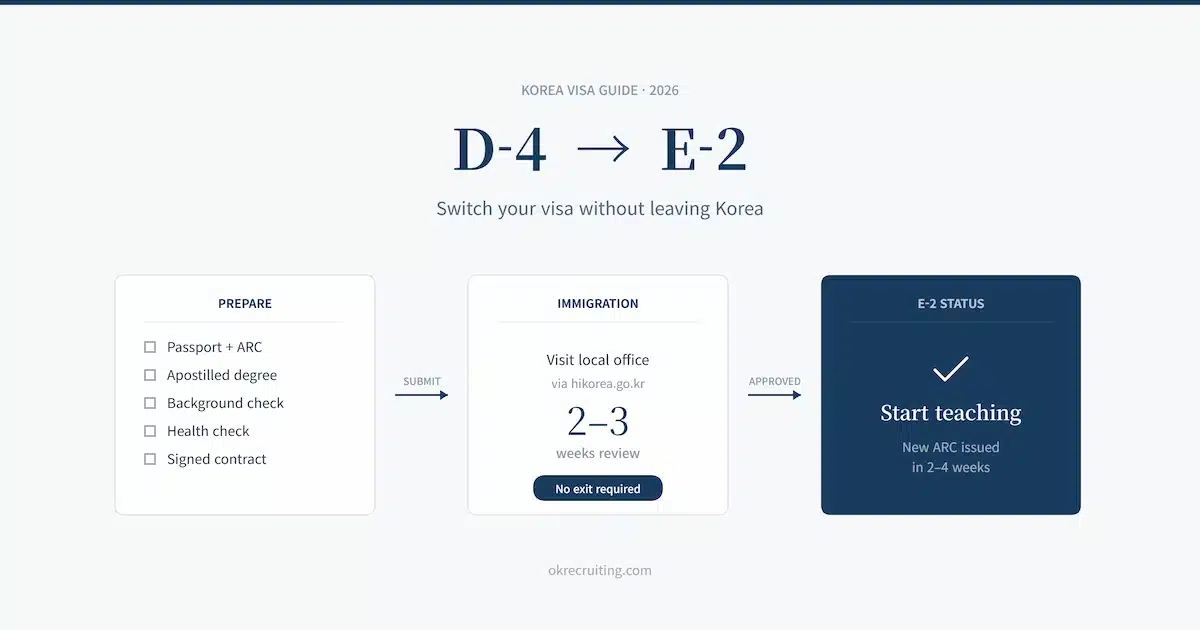
5. How Long Does the E-2 Visa Process Actually Take?
- Document collection: apostilled degree and criminal background check (the critical, slowest step).
- Visa issuance number: the school applies for this in Korea (about 1–2 weeks).
- Consulate step: the applicant submits to the Korean consulate in their home country.
The verdict: Start to finish, the process typically takes about 1.5 to 2 months. Apostille processing time is the main variable, so gather documents early.
▸ Read more: step-by-step E-2 visa process guide
6. Will I Get My Pension Money Back?
- Lump-sum refund (eligible nationalities): you receive your own contributions plus the employer’s matching contributions.
- The math: contributing about ₩115,000/month (4.75% of a ₩2.4M salary) with an equal employer match adds up to roughly ₩2.7–2.9 million after a one-year contract.
The verdict: For eligible nationalities it is closer to a forced savings account than a tax — but confirm your own country’s status with the National Pension Service before counting on it.
▸ Read more: the Korea pension refund, explained by nationality
7. Is Healthcare Expensive for Foreigners?
- NHIS (National Health Insurance): teachers are enrolled automatically; the employer pays half the premium, so the personal share is about 3.6% of salary in 2026.
- Cost: a standard doctor’s visit typically costs US$3–5, and prescription medicine is similarly affordable.
The verdict: Routine medical and dental care is covered at a small fraction of the cost in most Western countries.
▸ Read more: complete guide to Korean health insurance (NHIS)
8. How Much Money Should I Bring to Korea?
The verdict: Bring at least US$1,000–1,500 (about ₩1.5–2.0 million). That covers food, transport, basic household items (bedding, detergent), and socializing during the first month before payday.
▸ Read more: 5 essential tips for thriving as a teacher in Korea
9. Do Teachers Really Only Get 10 Vacation Days?
- Paid annual leave: under the Labor Standards Act (Article 60), a first-year employee earns 1 day per month worked (up to 11 days in the first year), rising to 15 days after one full year.
- Public holidays: at workplaces with 5 or more employees, Korea’s national holidays are paid days off — roughly 15–18 days a year once substitute holidays are counted.
The verdict: Between paid leave, national holidays, and weekends, there is ample time to travel domestically or to nearby countries like Japan and Taiwan.
▸ Read more: complete guide to Korea’s 2026 public holidays
10. Does a “9-6” Contract Mean Teaching All Day?
- Teaching hours: usually around 30 hours a week of active class time.
- Office hours: the remaining time covers lesson planning, grading, and breaks.
The verdict: A clear contract specifies teaching hours separately from office hours, so check that distinction — and any overtime terms — before signing.
▸ Read more: understanding work hours in hagwons vs. public schools
Sources & official references
- Labor Standards Act — dismissal notice (Art. 26), annual paid leave (Art. 60): law.go.kr
- Ministry of Employment and Labor (worker protections, complaints): moel.go.kr
- National Pension Service (lump-sum refund eligibility by nationality): nps.or.kr
- National Health Insurance Service (2026 contribution rates): nhis.or.kr/english
- E-2 visa rules and documents (Korea Immigration, Ministry of Justice): hikorea.go.kr
About this guide: Maintained by OK Recruiting, a Korea-based agency that has placed English teachers in Korea since 2006. Figures and rules are current as of 2026; social-insurance rates and laws change over time, so confirm the details with the primary sources above before making decisions.