

What English teachers actually need to know before you fly — the meds, the visa medical check, and the disclosure decision.
In our experience, most teachers who take antidepressants clear all of this without a problem. The trick is knowing which of your medications is routine and which one needs paperwork before you get on the plane.
This map is about bringing your medication in. The visa side — where discretion actually matters — is further down.
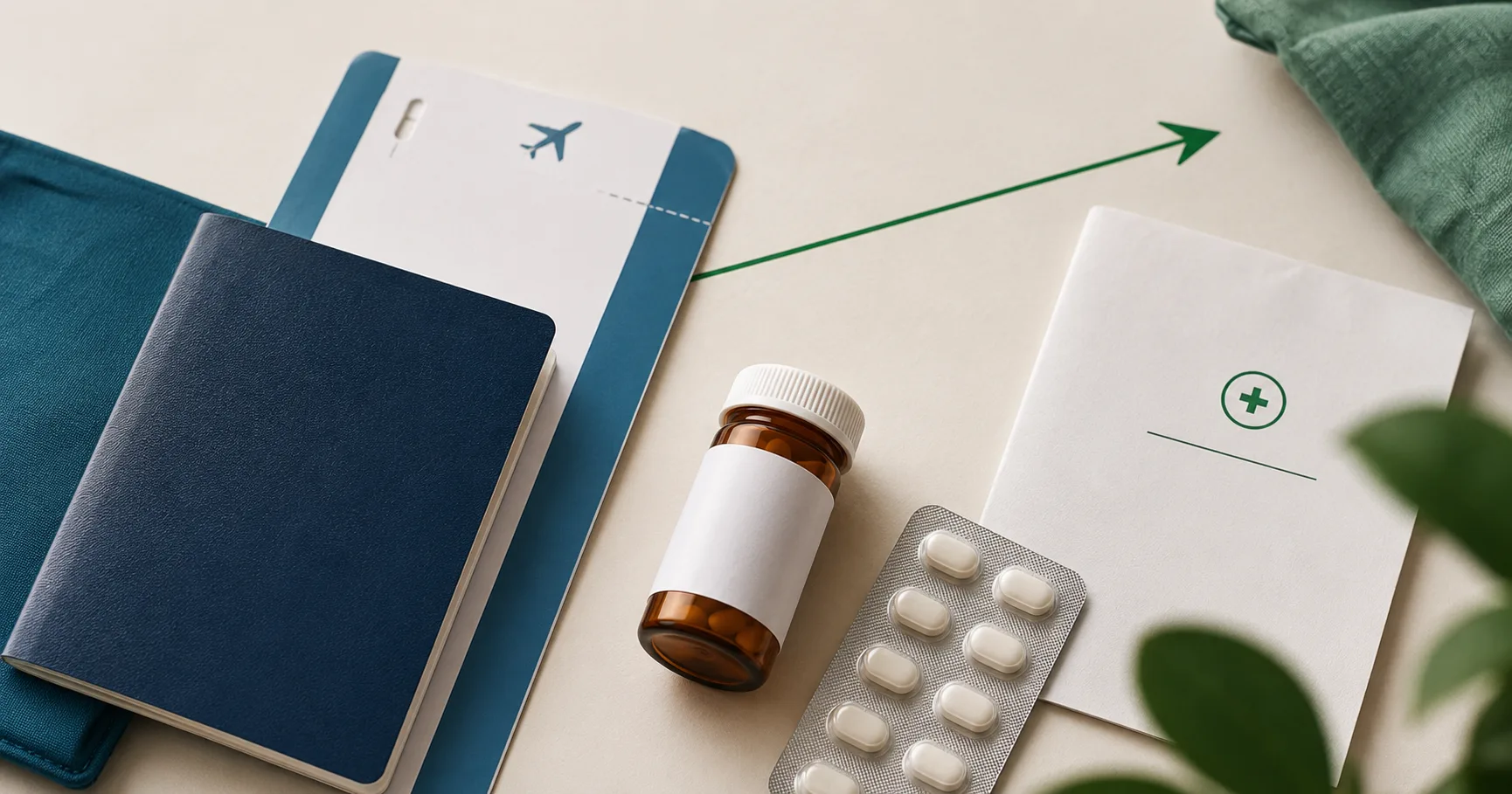
- Most antidepressants (SSRIs/SNRIs — Lexapro, Zoloft, Prozac, Effexor, Wellbutrin) are not controlled in Korea: hand-carry up to a 3-month supply (6 bottles) with your prescription and a doctor's letter. No permit.
- Benzodiazepines (Xanax, Ativan, Valium) and zolpidem (Ambien) are controlled: get MFDS approval before you fly — maximum 90 days' supply, apply about two weeks ahead.
- The E-2 medical check screens for four illicit drugs (meth, cocaine, opiates, cannabis) — not antidepressants. Do not stop your medication for it.
- Antidepressants are not a legal bar to an E-2 visa, but pre-approval is discretionary — tell your recruiter, and carry an English doctor's letter.
First, find your medication
Almost every question below comes down to one split. Find your medication in the directory, then follow its route.
- Lexaproescitalopram
- Zoloftsertraline
- Prozacfluoxetine
- Paxilparoxetine
- Effexorvenlafaxine
- Cymbaltaduloxetine
- Wellbutrinbupropion
- Remeronmirtazapine
- Desyreltrazodone
- Xanaxalprazolam
- Ativanlorazepam
- Klonopinclonazepam
- Valiumdiazepam
- Ambienzolpidem
Don't see your medication? Almost all antidepressants sit in the green route, but don't assume — check with the MFDS (narcotics@korea.kr · +82-43-719-2813) before you fly. When in doubt, travel with your prescription and your doctor's letter.
Cannabis / CBD / hemp and amphetamines (Adderall, Vyvanse) aren't allowed even with a prescription. Cannabis in particular can mean arrest or an entry ban — including on layovers. Stimulant ADHD medication has its own rules; see our separate guide.
Getting your medication into Korea
Green route — antidepressants (no permit)
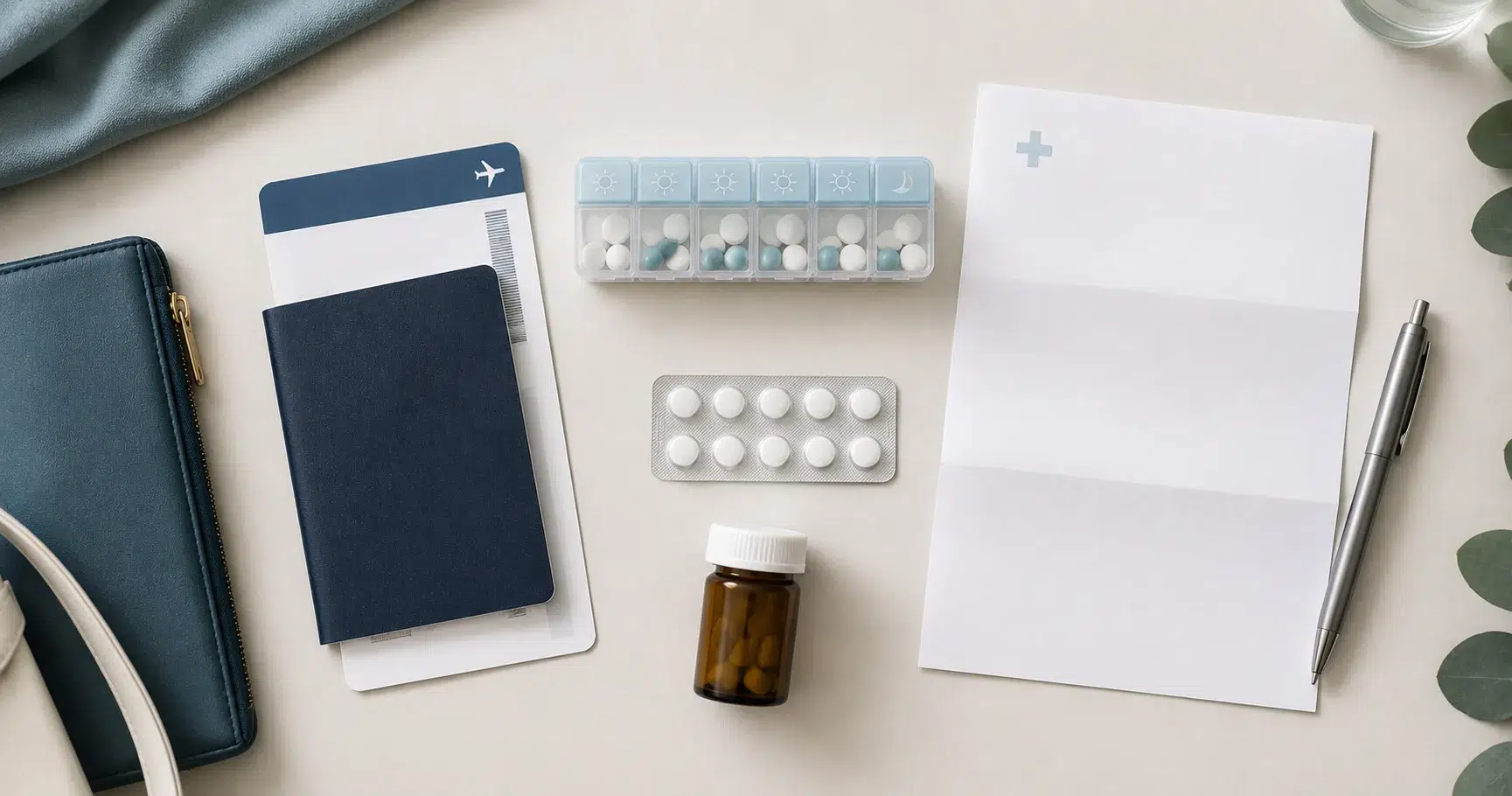
Korea lets you hand-carry a personal supply — up to six bottles (or a three-month supply), as the U.S. Embassy in Seoul summarizes the rule. Keep everything in its original labeled packaging and carry three documents:
Your original prescription(s).
A letter from your doctor stating your medical condition.
A statement listing the medicines you're bringing.
Permit route — benzodiazepines & zolpidem
Because these are psychotropic drugs, anyone entering Korea with them — regardless of nationality — needs advance approval from the Ministry of Food and Drug Safety (MFDS) under the Narcotics Control Act.
Apply online at the MFDS self-treatment narcotics system (nedrug.mfds.go.kr). Online applications opened Dec 2024.
Passport copy, flight e-ticket, your doctor's diagnosis/prescription, and (if your home country requires one) an export approval. Korean or English is accepted.
Carry the MFDS approval and your prescription with the medication, and follow the customs channel and officer's guidance on arrival.
narcotics@korea.kr · +82-43-719-2813 (MFDS Narcotics Policy Division).
The E-2 medical check: what it actually tests
After you arrive, you complete a medical exam (within 90 days) for your residence registration. The mandatory drug portion is a urine test for four illicit substances: methamphetamine, cocaine, opiates, and cannabis — the categories set by the Ministry of Justice. It does not test for whether you take an antidepressant. Lexapro, Zoloft and the rest are simply not what this test looks for.
Stopping an antidepressant abruptly can cause real withdrawal effects, and there's no upside — the test isn't looking for it. If you ever taper off, do it with your doctor, never for a job.
One caveat worth knowing: false positives
Some antidepressants can trigger a false positive on the initial screening immunoassay — most notably bupropion (Wellbutrin) showing as amphetamine and venlafaxine (Effexor) showing as PCP (documented in clinical reviews such as Mayo Clinic Proceedings). In practice this isn't a problem: Korea runs a confirmatory GC/MS test on any positive screen, which distinguishes your prescribed medication from an illicit drug. To be safe, carry your prescription and an English doctor's note so any question is resolved on the spot.
The mandatory E-2 panel is those four illicit drugs — it does not include benzodiazepines or zolpidem. But don't rely on that: benzodiazepines are detectable on standard drug panels, some clinics test more, and Korea has been widening drug screening. More to the point, these are controlled substances — your real obligation is the MFDS import permit, not slipping past a screen. Bring them legally, with the permit and your prescription, and detection is a non-issue.
Disclosure, your recruiter & immigration discretion
There's no law that automatically refuses you for taking antidepressants. Korea's Immigration Act (Article 11) lets immigration refuse entry to "drug addicts" and to "a person with a mental disability who lacks the capacity for reasonable judgment and has no one in Korea to assist them." That's a high bar aimed at untreated, unsupported cases — not someone managing depression or anxiety with prescribed medication.
But "no automatic bar" is not the same as "no risk." Before your visa is issued, your employer files for a Certificate of Confirmation of Visa Issuance (사증발급인정서) — the pre-approval whose Visa Issuance Confirmation Number they send you to take to the consulate. That approval is a discretionary immigration decision. In practice, when psychiatric treatment is disclosed, some offices request extra documents, and refusals do happen. It's inconsistent and office-dependent — not a fixed rule, but a real possibility.
Two different "disclosures" — don't confuse them
The immigration medical form Not required
You're not legally required to volunteer a psychiatric history here — your binding obligation is the post-arrival drug/TB test. That's different from answering a direct question untruthfully: don't put false information on an official form. If a form asks and you'd rather not spell it out, that's a conversation to have with your recruiter — not a box to lie in.
Your recruiter & employer Do tell them
Much of the advice online is "don't tell anyone," and we understand why — stigma around mental health is real in Korea. But the people filing your visa are the exception. They submit your pre-approval and can only prepare the right documentation and timing if they know. Hiding it from them is the version that backfires.
The hospitals that run visa health checks may ask for an English letter from your doctor stating whether you pose any risk of harm to yourself or others (they note "no violent tendency"). A short letter confirming your condition is stable and well-managed is usually all it takes — and it's the same document that reassures a cautious immigration officer.
In 2025, one of our teachers on antidepressants was refused at one local immigration office, then approved after submitting an English psychiatrist's letter at another. The takeaway isn't "you'll be rejected" — it's that immigration has discretion, outcomes vary by office, and the right paperwork — prepared with your recruiter — resolves it. Carry the letter; you may never need it.
Continuing your treatment in Korea
You generally can't get a Korean prescription until after your Alien Registration Card (ARC) is issued — often 2–4 weeks after arrival. Bring enough supply (within the limits above) to cover it.
SSRIs are among the most-prescribed antidepressants in Korea (escitalopram and fluoxetine lead), so continuing treatment is realistic.
You can continue with a Korean psychiatrist too, but expect tighter controls on these — plan your MFDS-approved supply to bridge comfortably.
Major cities — especially Seoul — have English-speaking psychiatrists. Expect roughly monthly visits for refills at first.
Frequently asked
Does the E-2 visa medical exam test for antidepressants?
No. It screens for four illicit drugs — methamphetamine, cocaine, opiates and cannabis. Antidepressant use is not tested.
Will my antidepressant show up as an illegal drug?
SSRIs and SNRIs aren't opioids or narcotics, and aren't what the test looks for. A few antidepressants (notably bupropion and venlafaxine) can cause a false positive on the first screen — but Korea's confirmatory GC/MS test clears it. Carry your prescription and you're fine.
Should I stop taking my medication before the health check?
No. There's no medical reason to (the test isn't looking for it) and stopping abruptly can cause withdrawal. Only ever taper with your own doctor.
Do I have to tell my school or recruiter?
You're not legally required to write a psychiatric history on the immigration medical form (though you shouldn't put false answers on it either). But you should tell your recruiter and employer — they file your visa pre-approval and can only prepare the documentation that prevents problems if they know. Treat your recruiter as your advocate, not a gatekeeper.
Can I bring my Xanax or Ambien?
Only with MFDS advance approval (they're controlled). Apply online at least ~2 weeks before you fly; max 90 days' supply. SSRIs and SNRIs don't need this.
Will I be denied a visa just for taking antidepressants?
No law automatically refuses you for it. But visa pre-approval is a discretionary immigration decision, and disclosed psychiatric treatment can bring extra document requests or a refusal — inconsistent and office-dependent. An English doctor's letter (condition stable, no danger to self or others), prepared with your recruiter, is the way to resolve it.
Can I refill my prescription in Korea?
Yes — a Korean psychiatrist can prescribe it, but only once your ARC is issued (2–4 weeks after arrival). Bring enough to cover that gap.
OK Recruiting
Managing a condition and moving to Korea?
We place teachers every month — including teachers who take antidepressants. Tell us up front and we handle the visa paperwork with you, including the documentation that keeps this routine. If that's you, start your application.
Apply onlineSources
- U.S. Embassy Seoul, Information on Controlled Substances (updated May 2026).
- Korea Ministry of Food and Drug Safety — self-treatment narcotics/psychotropics import approval.
- Korea Ministry of Foreign Affairs — consular notices on carrying self-treatment narcotics (90-day limit).
- Korea Customs Service — medicines containing controlled substances.
- Korea Immigration Act, Article 11 (Korea Law Information Center).
- Ministry of Justice notice — E-2 employment medical drug-test items (Enforcement Rule §76(2)).
- Mayo Clinic Proceedings, "Clinical Interpretation of Urine Drug Tests"; Journal of Analytical Toxicology review of immunoassay false positives.
Published by OK Recruiting, a recruiter that places English teachers in Korea. This article is general information, not medical or legal advice. Drug classifications and immigration procedures can change — confirm current requirements with the MFDS and Korean immigration, and follow your doctor's guidance on your medication.