

Living in Korea · Chuseok (추석)
Chuseok (추석), also called Hangawi, is Korea's harvest festival and one of the two biggest holidays of the year — the closest thing the calendar has to Thanksgiving. For an English teacher it means a few days off, a country on the move, and a good chance to see Korean family traditions up close. This guide covers the dates, what actually happens, and what it means for your job. Written by OK Recruiting, a Korea-based teacher recruiter since 2006.
| Year | Chuseok day | Official holiday | Typical break |
|---|---|---|---|
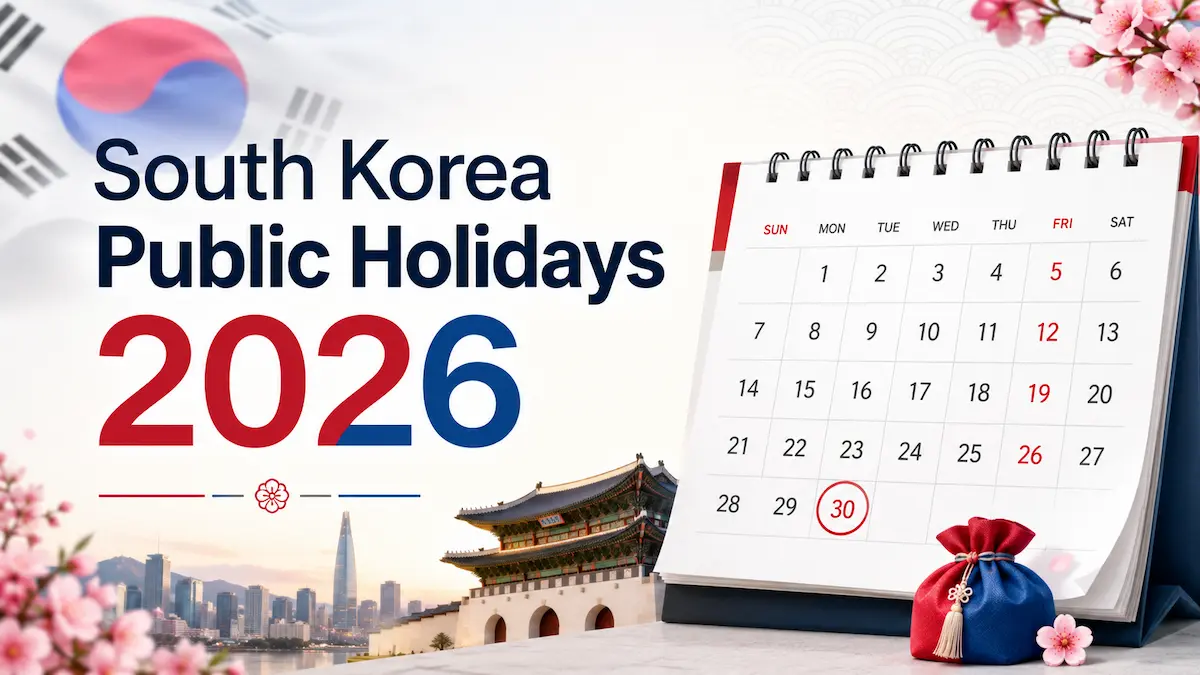
| 2026 | Fri, Sept 25 | Thu Sept 24 – Sat Sept 26 | 4 days (Thu–Sun) |
| 2027 | Wed, Sept 15 | Tue Sept 14 – Thu Sept 16 | Take Fri off for a 6-day break |
Both years confirmed against the Korea Astronomy and Space Science Institute's lunar-solar conversion (linked in Sources). Chuseok falls on the 15th day of the 8th lunar month, so the Gregorian date shifts each year, from mid-September to early October.
What Chuseok is, and what "Hangawi" means
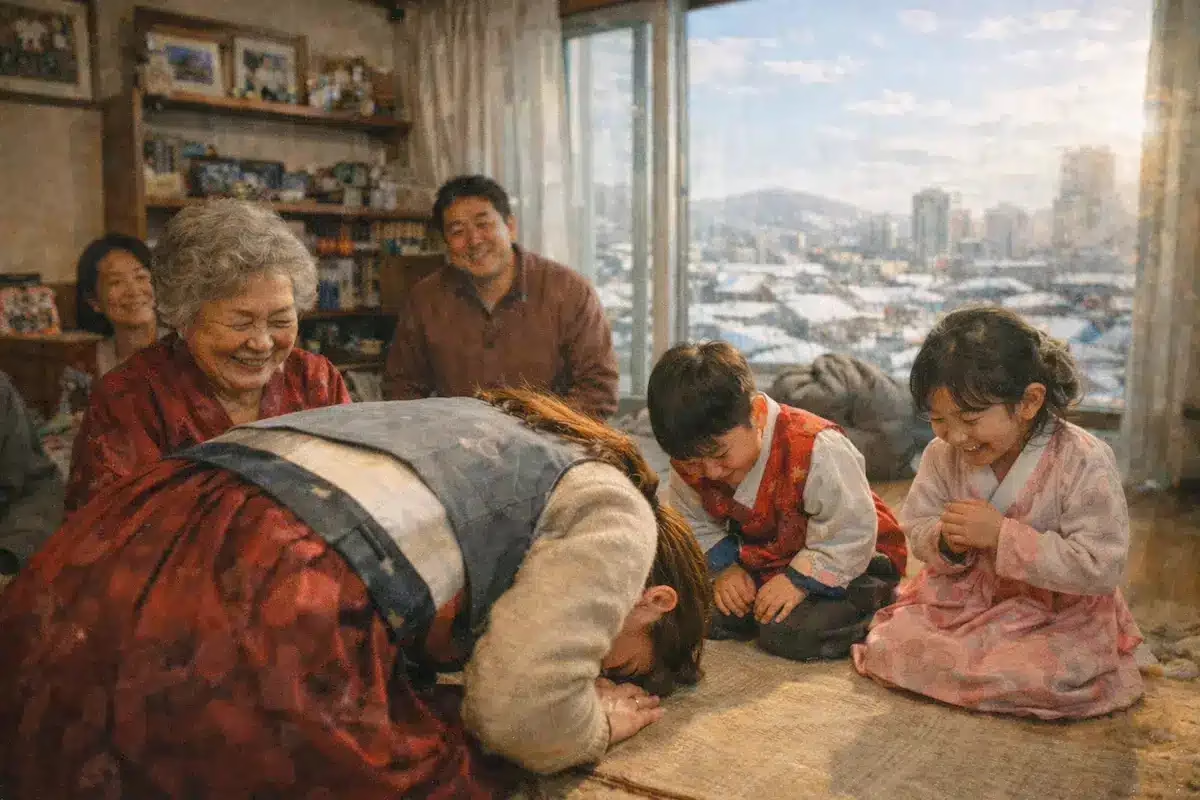
Chuseok literally means "autumn evening." Its older native name, Hangawi, means "the great middle" — han (great) plus gawi (the middle of the 8th lunar month), which is to say the harvest full moon. It is a time to thank ancestors for the year's harvest, so it is family-and-ancestor centred rather than pilgrim-themed. Families travel back to their hometowns, hold a memorial rite, share food, and gather under the fullest moon of the year.
Traditions you'll see
Charye (차례)
A memorial rite held on Chuseok morning at the family elder's home, with a table of newly harvested rice, fruit, and songpyeon set out to honour ancestors.
Beolcho and Seongmyo
In the weeks before Chuseok, families trim the grass around ancestral graves (beolcho); during the holiday they visit to pay respects (seongmyo).
Ganggangsullae UNESCO 2009
A women's circle dance performed under the full moon in southwestern Korea, inscribed on UNESCO's Intangible Cultural Heritage list in 2009.
Games and hanbok
Folk games such as ssireum (Korean wrestling) and yutnori (a board game played with wooden sticks), often with families in hanbok.
Chuseok food
Songpyeon (송편)
Half-moon rice cakes filled with sesame, sweet beans, or chestnut, steamed over a layer of pine needles — the song in the name means pine. The half-moon shape stands for a brighter future still to come.
Jeon (전)
Savoury pan-fried fritters — vegetables, fish, or meat in a light egg-and-flour batter. The smell of jeon frying is the smell of the holiday.
Hangwa (한과)
Traditional confections made from grain flour, honey, and nuts. The classic holiday sweet, and a standard gift set.
Harvest fruit
Freshly harvested Korean pears, apples, and persimmons appear everywhere, and premium fruit boxes are one of the most common Chuseok presents.
What it means for your teaching job
The three official Chuseok days are national public holidays, so public schools close and virtually every hagwon does too. It is paid time off; you should not lose salary for the holiday itself.
The legal basis matters if your academy is small. Since January 1, 2022, workplaces with five or more employees must treat public holidays as paid leave under the Labour Standards Act. Workplaces with fewer than five employees are not covered by that rule, and plenty of small hagwons sit under that line. That is why two teachers at two academies can be given genuinely different, equally lawful arrangements.
Beyond the three days, practice varies at the edges: some hagwons attach an extra day or two, others reopen the moment the official holiday ends, and a few schedule make-up classes around the break. None of that is standardised.
"Which exact days are we closed for Chuseok, is the time paid, and are there any make-up classes?" Getting the answer in writing early is what lets you book travel before everything sells out.
Surviving the travel exodus
Chuseok sets off the heaviest travel week of the Korean year, and most of it moves by road. Expressways crawl, and KTX and express-bus tickets sell out within the booking window.
- Booking home: reserve KTX or bus tickets the moment sales open. Korail releases Chuseok reserved seats on set dates roughly a month ahead; miss it and you are standing or driving.
- The quiet alternative: Seoul empties out. Palaces and many museums run free admission and special programmes, traffic disappears, and the city is calmer than at any other point in the year.
- Flying out: international flights are popular and priced at a peak over Chuseok. Book well ahead if you intend to leave the country.
What's open, what's closed
Usually open
- Convenience stores, around the clock
- Most chain restaurants and cafés
- Palaces, museums and major attractions, often with free programmes
- Emergency rooms and on-duty clinics and pharmacies
Usually closed
- Banks, government offices and post offices, all three days
- Many small shops, local restaurants and clinics
- Some large marts, on Chuseok day itself
- Ordinary pharmacies — use an on-duty holiday pharmacy
Emergency rooms run as normal. The government's E-Gen portal lists on-duty clinics and pharmacies near you, and a call to 119 will do the same. 1330 is the easiest English-language line for directions and interpretation.
Frequently asked questions
When is Chuseok in 2026?
Chuseok falls on Friday, September 25, 2026. The official holiday runs Thursday, September 24 through Saturday, September 26. Because the third day lands on a Saturday, no substitute holiday applies, so most teachers get four consecutive days off, Thursday through Sunday.
Do English teachers in Korea get time off for Chuseok?
Yes. The three official Chuseok days are national public holidays, so public schools close and virtually all hagwons do too. Academies with five or more employees must give public holidays as paid leave under the Labour Standards Act; those with fewer than five employees are not covered by that rule, so their arrangements can differ. Confirm your exact schedule with your employer in advance.
What is Chuseok?
Chuseok, also called Hangawi, is Korea's harvest festival, held on the 15th day of the eighth lunar month under the full moon. Families gather to honour ancestors with a memorial rite called charye, tend family graves, and share foods like songpyeon rice cakes. It is often compared to Thanksgiving.
Is it a good time to travel in Korea during Chuseok?
It depends on timing. Highways, trains, and buses run at capacity across the holiday, and prices spike on the peak days. Book KTX and bus tickets the moment reservations open, or stay in the city, since Seoul is unusually quiet and palaces and museums often run free holiday programmes.
What is open and closed during Chuseok?
Banks, government offices, and post offices close for all three official days, and many small shops, restaurants, and clinics also shut. Convenience stores stay open, as do most chain restaurants, major tourist attractions, and palaces. For urgent medical care, emergency rooms operate normally and the E-Gen portal lists on-duty clinics and pharmacies.
When is Chuseok in 2027?
In 2027 Chuseok falls on Wednesday, September 15, with the official holiday running Tuesday, September 14 through Thursday, September 16. None of those days falls on a Sunday, so no substitute holiday applies. Taking Friday, September 17 as a single day of annual leave turns it into a six-day break.
Sources
- Holiday definition and substitute-holiday rule — Regulations on Public Holidays for Government Offices, Articles 2 and 3 (law.go.kr)
- Paid public holidays and the five-employee threshold — Labour Standards Act, Article 55 (law.go.kr)
- 2026 and 2027 lunar-solar dates — Korea Astronomy and Space Science Institute
- Ganggangsullae inscription — UNESCO Intangible Cultural Heritage
- Holiday medical and pharmacy rosters — E-Gen
- Culture and travel background — Korea Tourism Organization
We recruit English teachers for schools across Korea and handle the E-2 process end to end. See current teaching jobs.
Dates and rules verified August 2026. The Gregorian date of Chuseok changes each year; always confirm your own school's schedule and travel bookings directly. Related reading: Seollal, Korea's other major family holiday and South Korea public holidays.