

Seollal is the first day of the lunar calendar and, along with Chuseok, one of the two holidays that empty Korea's cities and fill its highways. For a teacher it means three days off, a country in motion, and the best chance you will get to see Korean family life from the inside.
This guide covers the dates, what your school is likely to do, what actually happens over the three days, and what stays open if something goes wrong. Written by OK Recruiting, a Korea-based teacher recruiter since 2006.
The three days
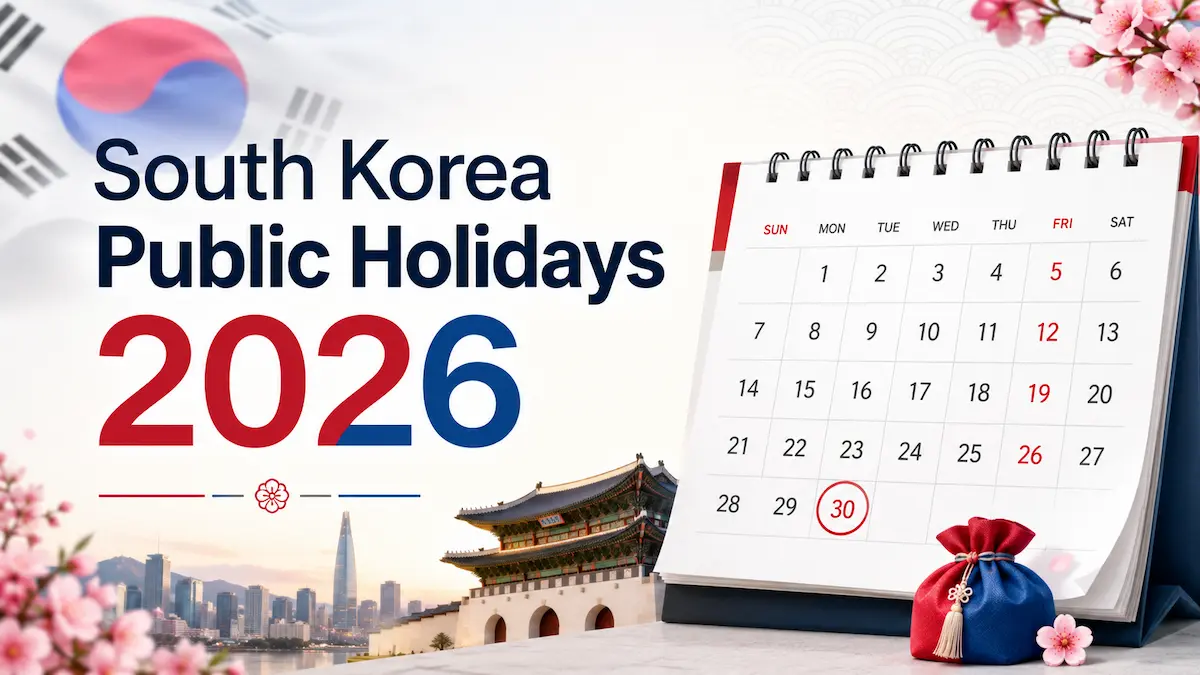
The holiday is defined in law as three days — the day before Seollal, Seollal itself, and the day after (lunar 12th month last day, and the 1st and 2nd of the 1st month). In 2026 none of those days lands on a Sunday, so there is no substitute holiday. Combined with the weekend before, most people are off from Saturday February 14 through Wednesday February 18.
| Year | Seollal day | Official holiday | Substitute |
|---|---|---|---|
| 2026 | Tue, Feb 17 | Mon Feb 16 – Wed Feb 18 | None — no Sunday overlap |
| 2027 | Sun, Feb 7 | Sat Feb 6 – Mon Feb 8 | Tue Feb 9 — Seollal itself falls on a Sunday |
Why the date moves. Seollal is the first day of the first lunar month, so its position in the Gregorian year shifts by roughly three weeks from one year to the next. Both years above are taken from the Korea Astronomy and Space Science Institute's lunar-solar conversion, linked in Sources — worth checking there rather than trusting a holiday-listing site, since those frequently disagree with one another.
What it means for your teaching job
The three Seollal days are public holidays, so public schools close. Hagwons are where it varies, and the variation is legal, not arbitrary.
Since January 1, 2022, workplaces with five or more employees must treat public holidays as paid leave under the Labour Standards Act. Workplaces with fewer than five employees are not covered — and plenty of small hagwons sit under that line. That single fact explains most of the confusion teachers run into: two friends at two academies can have genuinely different, equally lawful arrangements.
What varies at the edges: some academies attach an extra day and give you a longer run, others reopen the moment the official holiday ends, and a few schedule make-up classes. Settle it in advance rather than assuming.
Ask your director, in writing: which exact days are we closed for Seollal, is the time paid, and are there any make-up classes? Getting the answer before tickets go on sale is the whole game. The same question returns in September — our guide to Chuseok covers how academies handle Korea's other big family holiday.
What actually happens
Charye (차례)
Early on Seollal morning, families set a table for their ancestors — rice cake soup, fish, fruit, and rice wine, arranged by convention — and bow. Afterwards everyone eats the food together. An invitation to one is a real gesture; if you get it, go.
Sebae (세배)
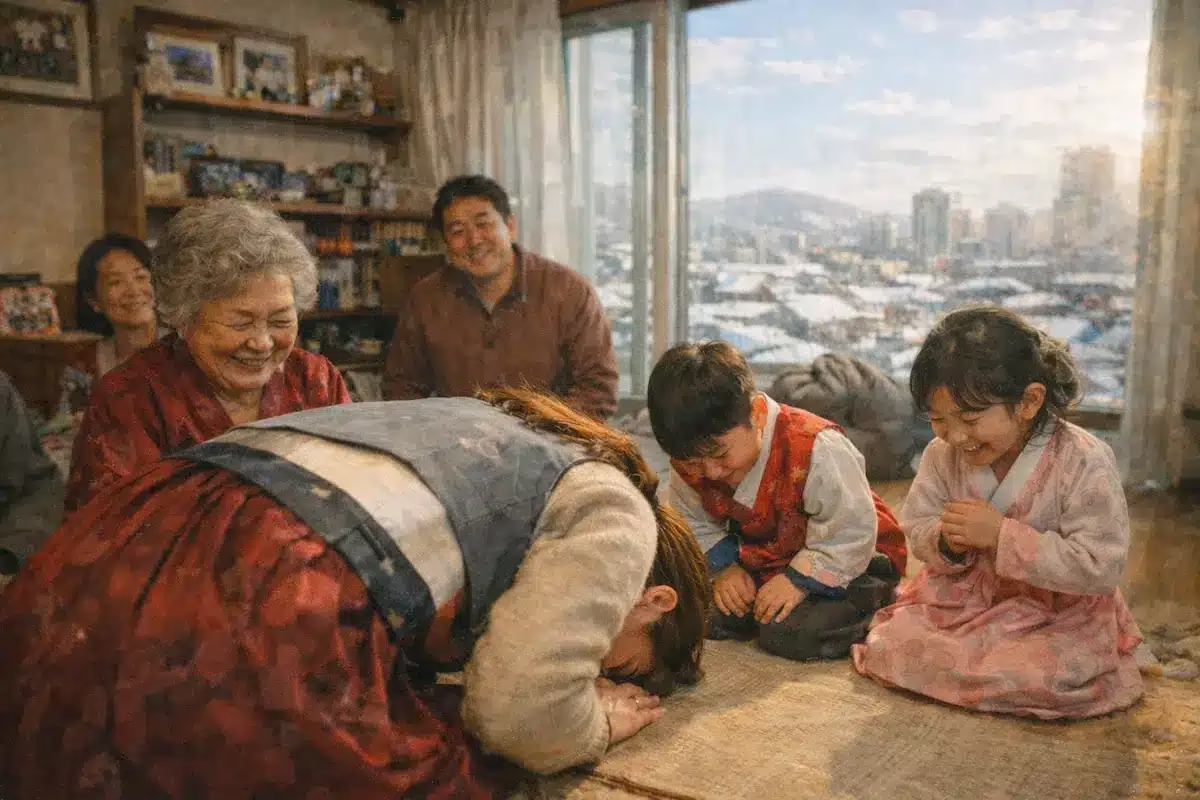
Younger family members perform a deep formal bow to their elders and offer New Year wishes. In return they get sebaetdon, new bills in a decorated envelope. Nobody expects a foreign guest to perform the full bow correctly, but the greeting is worth learning.
Visiting graves (성묘)
Some families visit ancestral burial sites to tidy them and pay respects. It is quiet and unceremonial. Dress conservatively and follow whoever brought you.
The food
| Dish | What it is | Why it's on the table |
|---|---|---|
| Tteokguk 떡국 | Sliced rice cake soup, usually beef or anchovy broth, sometimes with dumplings. | The one dish you are expected to eat. The coin-shaped slices stand for prosperity, and eating it is traditionally said to make you a year older. |
| Jeon 전 | Pan-fried savoury pancakes — green onion, courgette, fish, oyster. | Made in quantity the day before. Dipped in soy-vinegar sauce. |
| Japchae 잡채 | Sweet potato glass noodles with vegetables, sesame oil, often a little beef. | The reliable crowd-pleaser, and the safest plate if you are unsure about anything else. |
| Hangwa 한과 | Traditional confectionery — honeyed biscuits, puffed-rice sweets. | Labour-intensive enough that most families now buy it. Also a standard gift. |
The games
Yutnori (윷놀이)
Four wooden sticks thrown as dice, tokens moved around a board. The rules take two minutes to learn and the arguments last all afternoon. It travels well across a language barrier, which makes it the one game you can join on day one.
Jegichagi (제기차기)
Keeping a weighted shuttlecock in the air with your feet. Harder than it looks.
Neolttwigi (널뛰기)
A standing see-saw where two people launch each other into the air. Mostly seen at folk villages now.
Hwatu (화투)
The flower card game, played for small change. Gambling is illegal in Korea, but the law carves out casual play for trivial stakes, which is what a family table is.
Travel, or the decision not to
Seollal is the heaviest travel window of the Korean year. KTX seats on popular routes sell out within minutes of release, domestic flights price up sharply, and the expressways run at a crawl on the first and last days. If you intend to move, book as far ahead as you can and travel on the middle day rather than the edges.
The alternative is genuinely good: with most of the population elsewhere, Seoul is quieter than at any other point in the year. Palaces, museums and neighbourhoods you normally queue for are briefly empty.
Hanbok and palace admission. The Royal Palaces and Tombs Centre admits visitors in hanbok free of charge, and the holiday is one of the better days to use it. The guideline is stricter than people expect — both formal and modernised hanbok count, but a jeogori over jeans, or hanbok trousers with a T-shirt, does not. Check the current guideline before you rely on it.
What stays open
Open
- Convenience stores, around the clock
- Large department stores and malls (often shorter hours)
- Major tourist sites, palaces and museums
- Emergency rooms and designated holiday clinics and pharmacies
Closed
- Banks, post offices and government offices, all three days
- Most small shops and neighbourhood restaurants
- Ordinary clinics and pharmacies
- Many services on the eve as well — stock up before Feb 16
If you get sick
Regular clinics and pharmacies close, but a designated holiday duty roster runs throughout. The E-Gen emergency medical portal and Pharm114 both list which hospitals and pharmacies near you are open. Call 119 for an emergency and 129 for health guidance; 1330 is the tourism hotline and the easiest English-language line for directions and interpretation.
Save the nearest duty pharmacy before the holiday starts rather than searching for it while unwell. For what to keep on hand and how to ask for it, see our guide to Korean pharmacies and OTC medicines.
Worth knowing
Korean age is no longer how age works
You may still hear someone give an age a year or two above their international age, and tteokguk is still described as adding a year. Legally that ended: since June 2023 Korean law requires man-nai — international age, counted from date of birth — for all administrative purposes. The old counting age survives in conversation and in the Seollal custom, not on any form your school will ask you to sign.
Greetings
새해 복 많이 받으세요The standard New Year greeting. Use it with anyone.
잘 먹겠습니다Said before eating, to whoever fed you.
잘 먹었습니다Said after.
If you are invited somewhere
Bring fruit, traditional sweets, or something from your own country. Hand it over with both hands. Avoid knives and scissors, and avoid sets of four.
Traffic is a news event
Korean broadcasters run rolling expressway coverage across the holiday. Journey times on the first and last days routinely double. If you are driving, the mornings of the eve and the evenings of the final day are the two windows to avoid.
Using Seollal in class
The week before is the easiest cultural lesson of the year, because every student is an expert.
- Comparison: how is Seollal different from New Year where your teacher is from?
- Explaining: describe one Seollal tradition to someone who has never heard of it — good speaking practice, and it forces precision.
- Vocabulary: ancestor, respect, fortune, reunion, tradition, generation.
- Hands-on: teach the rules of yutnori in English, or design New Year cards.
Frequently asked questions
When is Seollal 2026?
Seollal 2026 falls on Tuesday, February 17. The public holiday covers February 16 to 18, Monday to Wednesday. With the preceding weekend, most people are off from February 14 through February 18.
Do English teachers in Korea get time off for Seollal?
Yes for the three official days. Public schools close. Hagwons with five or more employees must give public holidays as paid leave under the Labour Standards Act; academies with fewer than five employees are not covered by that rule, so their arrangements legitimately differ. Confirm your exact days with your employer in advance.
Is there a substitute holiday for Seollal 2026?
No. Under the Regulations on Public Holidays, a substitute day is added for Seollal only when one of the three holiday days falls on a Sunday. In 2026 they fall Monday to Wednesday, so no substitute day applies.
When is Seollal 2027?
Seollal 2027 falls on Sunday, February 7. The official holiday covers February 6 to 8. Because Seollal itself lands on a Sunday, a substitute holiday is added on Tuesday, February 9, giving a four-day run from Saturday February 6 through Tuesday February 9.
Why does the date of Seollal change every year?
Seollal is the first day of the first month of the lunar calendar, which does not align with the Gregorian calendar. The date therefore moves by around three weeks year to year, usually falling between late January and late February. The Korea Astronomy and Space Science Institute publishes the official conversion.
What should I eat and say on Seollal?
Eat tteokguk, the rice cake soup served on the day. Say "saehae bok mani badeuseyo" (새해 복 많이 받으세요), the standard New Year greeting, to colleagues, neighbours and anyone hosting you.
What is open during Seollal?
Convenience stores, large malls, major tourist sites, and a designated roster of holiday clinics and pharmacies stay open. Banks, post offices, government offices, most small shops and ordinary clinics close for all three days. The E-Gen portal lists which medical facilities near you are on duty.
Is it a good time to travel in Korea?
It is the busiest domestic travel window of the year. Book KTX seats the moment they are released and expect expressway journeys to take far longer than usual on the first and last days. Staying in the city is a reasonable alternative, since Seoul is unusually quiet.
Sources
- Holiday dates and substitute-holiday rule — Regulations on Public Holidays for Government Offices, Articles 2 and 3 (law.go.kr)
- Paid public holidays and the five-employee threshold — Labour Standards Act, Article 55 (law.go.kr)
- International age in law — Framework Act on Administration, Article 7-2 (law.go.kr)
- 2026 and 2027 lunar-solar dates — Korea Astronomy and Space Science Institute
- Hanbok free-admission guideline — Royal Palaces and Tombs Centre, Korea Heritage Service
- Holiday medical and pharmacy rosters — E-Gen, Pharm114
Dates and rules verified August 2026. The Gregorian date of Seollal changes each year; confirm your own school's schedule directly.
We recruit English teachers for schools across Korea and handle the E-2 process end to end. See current teaching jobs.