

South Korea has four distinct seasons, and each one asks for different clothes and a different kind of readiness — from spring’s yellow dust to summer’s monsoon and winter’s dry Siberian cold. Here’s what to actually expect, and pack, by season.
A seasonal weather guide for foreign English teachers moving to South Korea, from OK Recruiting, a Korea-based recruiter (since 2006). Figures are Seoul climate normals (KMA 1991–2020); the south (Busan, Jeju) runs milder in winter. Current as of 2026.
The four seasons at a glance
| Season | Months | Seoul temps | What defines it | Pack |
|---|---|---|---|---|
| Spring | Mar–May | 6→18°C (43→65°F) | Mild, but yellow-dust season | Layers, KF94 masks |
| Summer | Jun–Aug | ~26°C avg, 30–35°C highs (79–95°F) | Hot, humid, monsoon & typhoons | Light clothes, umbrella |
| Autumn | Sep–Nov | 22→7°C (71→45°F) | Mild, dry, clear — the best season | Light layers → sweater |
| Winter | Dec–Feb | −2°C avg, −10°C snaps (28→14°F) | Cold, very dry, Siberian wind | Heavy coat, thermals |
Spring (March–May)
Mild and blossoming — but check the air
Seoul: March avg 6°C (43°F) → May avg 18°C (65°F), highs to 24°C (75°F) · low humidity
Spring warms quickly from a cool March to a pleasant May, with the famous cherry blossoms in early-to-mid April. The catch is the air: this is yellow dust and fine dust season (below), and mornings can be sharply colder than afternoons.
Pack: a transitional coat and layers you can shed by midday, plus KF94 masks for high-dust days.
Summer (June–August)
Hot, humid, and wet — three challenges stacked
Seoul: August avg 26°C (79°F), highs 30–35°C (86–95°F), humidity ~70%+
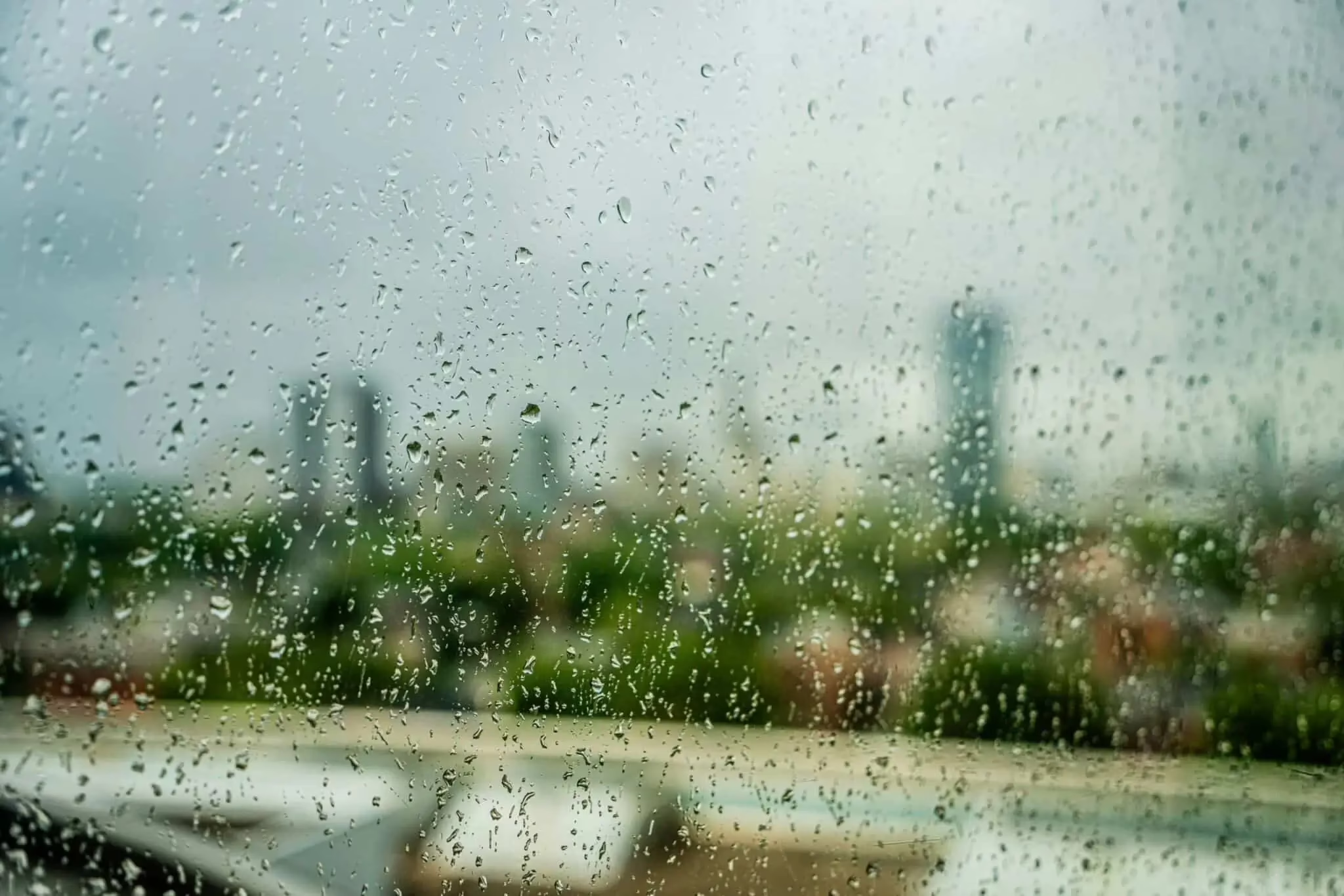
Summer is genuinely hot and sticky. Interiors are heavily air-conditioned, so a light layer helps indoors. Three hazards arrive in sequence: the jangma monsoon, then peak heat waves and tropical nights, then typhoon season (all covered below). 2024 was Korea’s hottest year on record, and Seoul logged 48 “tropical nights” (overnight lows staying above 25°C / 77°F) — the most ever — so summers are trending hotter, not just wetter.
Pack: light breathable clothing, a reliable umbrella, sun protection, and (for your apartment) a small dehumidifier — mold thrives in the monsoon.
Autumn (September–November)
The one everyone recommends
Seoul: September avg 22°C (71°F) → November avg 7.5°C (45°F) · dry and clear
Autumn is mild, dry, and clear — widely considered Korea’s most comfortable season, with brilliant foliage in October and November. The main caveat is that a late typhoon can still reach the peninsula into early October.
Pack: light layers in September, building to sweaters and a proper coat by late November.
Winter (December–February)
Cold, dry, and wind-driven
Seoul: January avg −2°C (28°F), highs 2°C (36°F), lows −5.5°C (22°F); cold snaps below −10°C (14°F)
Winter is cold and very dry, driven by the Siberian high. Snow is sporadic in Seoul (heavier on the east coast and in Gangwon). A well-known traditional pattern, samhan-saon (삼한사온, “three cold days, four warm”), still gets mentioned, though recent warmer winters follow it less reliably. The south is noticeably milder — Busan averages around 4°C (39°F) in January.
Pack: a serious winter coat, thermal base layers, and a hat and gloves — the dry wind makes it feel colder than the number.
Air quality: yellow dust and fine dust
Peaks in spring (March–May)
Yellow dust (황사, hwangsa) is coarse sand blown east from the Gobi and northern China; fine dust (미세먼지, PM2.5) is mostly man-made pollution. They often overlap in spring, creating a double hazard, though fine dust can spike from late winter on.
Check air quality daily on the official AirKorea (에어코리아) app, and wear a certified KF94 or N95 mask — surgical or cloth masks don’t filter the fine particles. When levels are high, keep windows closed and limit outdoor exercise.
Monsoon and typhoon safety
Summer into early autumn
The jangma monsoon typically reaches Seoul around June 24–25 and clears by late July, delivering roughly a third of Korea’s annual rain — increasingly as sudden, concentrated downpours rather than steady rain. Typhoon season runs mainly August–September, with a few storms affecting Korea in a typical year.
Watch Korea Meteorological Administration (KMA) forecasts and warnings, don’t rely on fixed calendar dates, and during a storm avoid flood-prone low-lying spots and underground spaces — the 2022 Typhoon Hinnamnor flooding was a hard lesson in that.
A note on staying well
Seasonal illness follows the weather — heat exhaustion in August, dust-related coughs in spring, colds in the dry winter. For minor ailments, a Korean pharmacy (약국, yakguk) — marked by a red “약” sign or a green cross — can dispense over-the-counter remedies quickly. Teachers placed on the east coast (Gangneung, Sokcho) or Busan will also notice the East Sea (동해) moderates local temperatures compared with inland Seoul.
Frequently asked questions
When is monsoon season (jangma) in Korea?
The jangma monsoon typically runs from late June to late July. It reaches Jeju around June 19, the south around June 23, and Seoul around June 24–25, usually clearing by late July. It brings roughly a third of Korea’s yearly rain, though exact dates shift each year — check the KMA forecast.
How cold does Korean winter get?
In Seoul, January averages about −2°C (28°F), with daytime highs near 2°C (36°F) and lows around −5°C (22°F). Cold snaps driven by Siberian winds can drop below −10°C (14°F). The south, such as Busan (~4°C / 39°F in January), is noticeably milder. Winters are cold and dry, with occasional snow.
Is Korea humid in summer?
Yes. Summer is hot and humid — August averages about 26°C (79°F) but feels hotter, with humidity around 70% or more and highs regularly reaching 30–35°C (86–95°F). The jangma monsoon adds heavy rain, and the heat continues after it ends.
What is yellow dust season in Korea?
Yellow dust (황사) season peaks in spring (March–May), when sand from the Gobi and northern China deserts blows across the peninsula, often combined with fine dust (미세먼지, PM2.5) pollution. Check air quality on the AirKorea app and wear a KF94 or N95 mask on high-dust days.
Does Korea get typhoons?
Yes — typhoon season runs mainly August to September (within a broader June–November window), with a few storms affecting the country each year. Recent examples include Typhoon Hinnamnor (September 2022) and Typhoon Khanun (August 2023). Monitor KMA warnings and avoid flood-prone and underground areas during a storm.
What is the best season to move to Korea, weather-wise?
Autumn (September–November) is widely considered the most comfortable — mild, dry, and clear, cooling from about 22°C (71°F) in September to 7°C (45°F) by November. Spring is also pleasant but brings yellow dust; summer is hot, humid, and wet; winter is cold and dry.
Sources: temperature and rainfall normals from the Korea Meteorological Administration (KMA, 1991–2020); air quality via AirKorea; 2024 heat records and monsoon timing per KMA. As of 2026.