

Teaching English in Korea · 2026 Guide
In short — how to teach English in Korea (2026):
You need a passport from one of 7 approved countries (US, Canada, UK, Ireland, Australia, New Zealand, South Africa), a bachelor’s degree in any field, and a clean criminal background check. Most teachers work at private academies (hagwons) or public-school programs (EPIK / GEPIK / SMOE) on an E-2 visa, with housing usually provided. At hagwons, first-year pay with no experience is typically around ₩2.4–2.5 million/month and rises with experience (₩3 million+ is possible); public-school (EPIK) programs generally pay less (salary & savings details). The usual path: choose a recruiter → get a job offer → apply for the E-2 visa → arrive and complete a health check.
Teaching English in Korea has become one of the most popular choices for native English speakers seeking international experience, cultural immersion, and financial stability. If you’re considering taking the leap, this guide will walk you through everything you need to know — from finding a job to settling into life in Korea.
1. Understand the Basic Requirements
To qualify for an ESL teaching job in Korea, you’ll typically need:
- A passport from one of the seven approved English-speaking countries (US, Canada, UK, Ireland, Australia, New Zealand, South Africa). The E-2 (Foreign Language Instructor) visa for English is limited to nationals of these countries.
- A bachelor’s degree in any field, proven by an apostilled copy of your diploma. Associate degrees do not qualify.
- A clean national-level criminal background check, apostilled and issued within the last 6 months (for example, an FBI check for US applicants, an RCMP/C-216C check for Canada, or an ACRO check for the UK).
- A medical check after you arrive. As of 2026 this covers tuberculosis, syphilis, and a drug test for methamphetamine, cocaine, opium, and cannabis. Korea removed the mandatory HIV test for E-2 teachers in 2017, so an HIV test is no longer part of the visa requirement.
- A TEFL/TESOL certificate is not required for most hagwon jobs, though it strengthens your application. Public-school programs — EPIK and its regional offices (GEPIK, SMOE) — do require one: a TEFL/TESOL/CELTA certificate, with 120 hours the standard that programs expect (100 hours is the official minimum), unless you hold a degree in education or a teaching license. Several offices, including Seoul (SMOE), also expect a 20-hour in-class (offline) practicum component.
The E-2 visa rules and required documents are set by Korea’s Ministry of Justice — see the official immigration portal hikorea.go.kr and the Korea Immigration Service. The post-arrival drug-test requirement is defined in the Immigration Control Act enforcement rules (law.go.kr). For a document-by-document breakdown, see the E-2 Visa Document Checklist.
2. Choose Your Job Type: Hagwon, Public School, or International School
There are several types of teaching jobs in Korea, each with a different schedule, level of stability, and set of requirements:
| Job type | Typical schedule | Vacation | Class size | Typical requirements |
|---|---|---|---|---|
| Hagwon (private academy) | Afternoon to evening | ~10 days/year | Small to medium | Bachelor’s + E-2; housing usually provided |
| Public school (EPIK, GEPIK, SMOE) | Daytime, weekdays | More (school breaks) | Larger | Bachelor’s + E-2; TEFL/TESOL required (120-hr standard; unless education degree or teaching license) |
| International school | Daytime (school calendar) | School calendar | Small | Teaching license + prior experience |
| University | Fewer contact hours | Long (semester breaks) | Varies | Master’s degree or publications; competitive |
On pay: first-year hagwon salaries with no experience typically start around ₩2.4–2.5 million/month and rise to ₩3 million+ with experience; public-school programs scale by qualifications and generally add more vacation. See the salary and savings guide for a full breakdown. For a side-by-side comparison of the two most common paths, see Hagwon vs. Public School in Korea.
Each option is broken down further here: Types of Teaching Jobs in Korea
3. Find a Recruiter
Navigating the hiring process in Korea can be overwhelming, especially for first-time applicants. Working with a reliable recruiting agency can save you time and stress. A good recruiter:
- Matches you with vetted schools that meet your preferences
- Assists with paperwork, interviews, and contract review
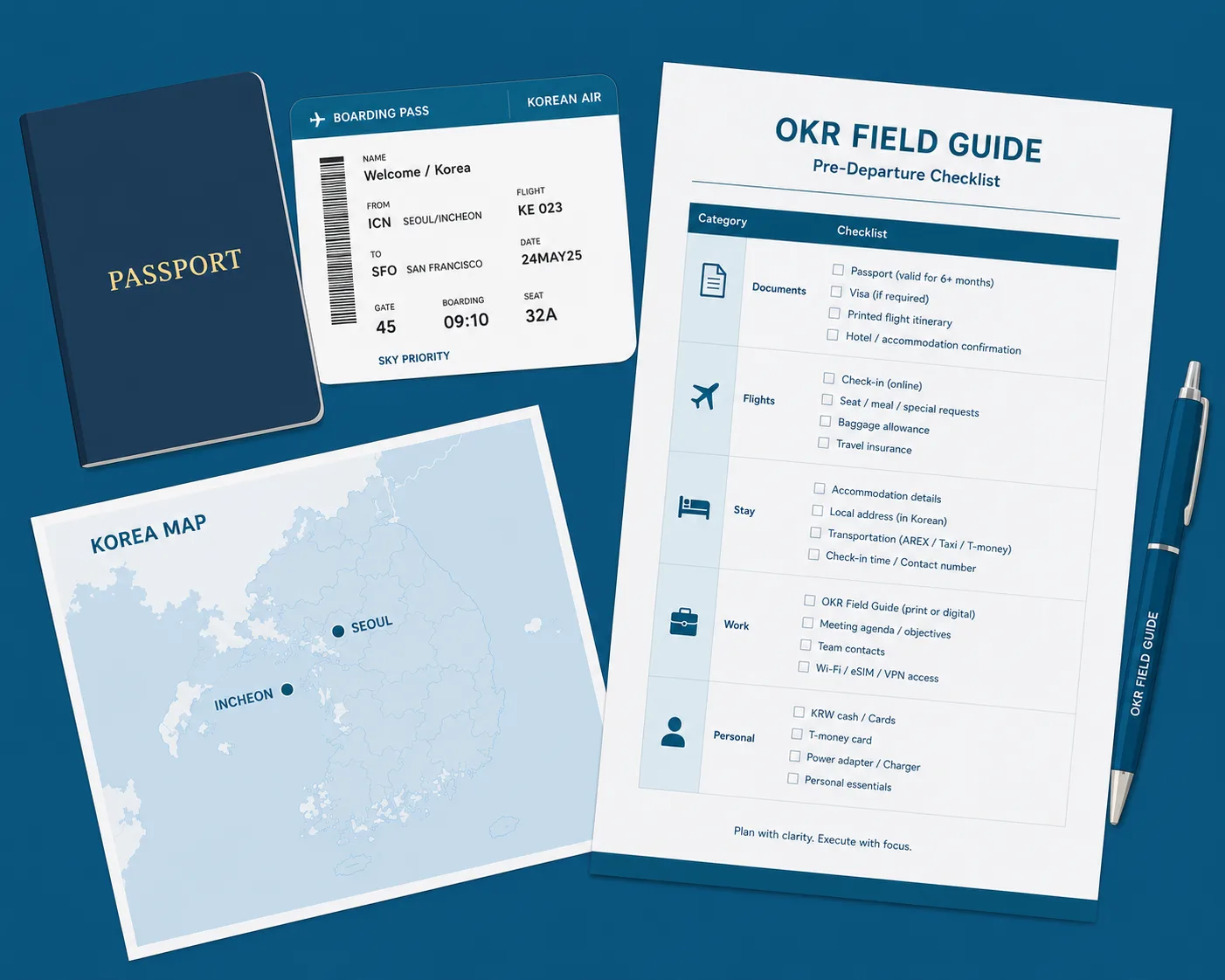
- Provides E2 visa guidance and pre-departure checklists
- Offers continued support after arrival in Korea
Not every agency offers this level of support, so it’s worth choosing carefully. A recruiter worth working with is based in Korea, has an established local track record, works only with schools it has screened, and stays involved after arrival rather than stepping away once the contract is signed.
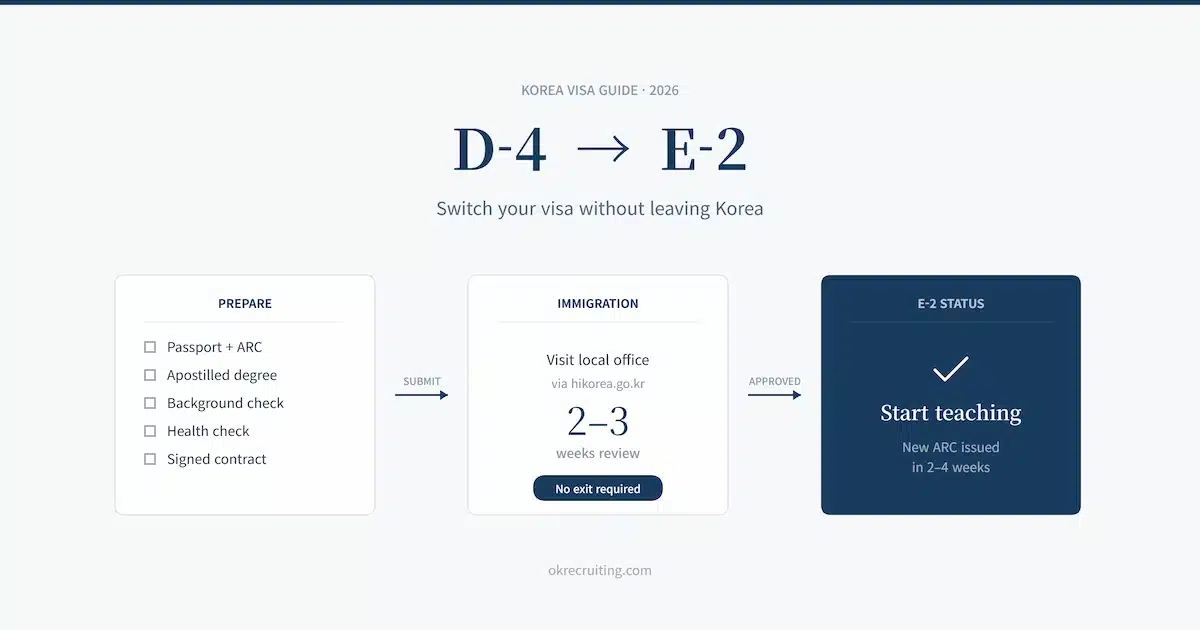
4. Prepare and Submit Documents for the E-2 Visa
Once you receive a job offer, you’ll begin your E2 visa application. You will need:
- A signed employment contract
- Original diploma with apostille authentication
- Criminal background check with apostille authentication
- Valid passport with at least 6 months remaining
- Visa application form, fee, and passport photo
Two of these documents — your diploma and your criminal background check — must carry an apostille. An apostille is an international certificate, created under the 1961 Hague Apostille Convention, that confirms a public document is genuine so it can be used abroad. It is issued by the competent authority in the country where the document was made, not in Korea:
- United States: the FBI background check is apostilled by the U.S. Department of State; a notarized copy of your diploma is apostilled by the Secretary of State of the state where it was notarized.
- Canada, UK, and others: your national police check and diploma are apostilled by that country’s designated authority.
Because a criminal background check is only valid for about 6 months, request it early — but not so early that it expires before your visa is issued.
You’ll submit your documents to the Korean consulate in your home country or as instructed by your recruiter. The consular visa step usually takes about 2–3 weeks, but gathering and apostilling documents beforehand can add several weeks, so start early. For a full breakdown of the visa process, visit: E2 Visa Process Guide
5. Arrive and Settle In
Once you arrive in Korea, you’ll go through a transition period. Most schools or recruiters will help with:
- Airport pickup and arrival orientation
- Applying for your Alien Registration Card (ARC)
- Opening a bank account and getting a Korean SIM card
- Setting up your apartment (utilities, trash system, etc.)
- Adjusting to daily life (transportation, grocery stores, etc.)
Korean culture is welcoming but may feel different at first. Give yourself time to adapt. Most new teachers feel comfortable within the first few weeks.
For relocation tips, check out: Living in Korea as a Teacher
6. Tips for Success in the Classroom
- Build rapport with students through consistency and respect
- Be flexible with different classroom dynamics
- Use visual aids, games, and real-life examples
- Maintain clear communication with co-teachers and staff
- Observe other teachers and ask for feedback
Don’t stress about being perfect. Every teacher grows with time and experience.
7. Final Thoughts
Teaching English in Korea is more than a job; it’s a chance to grow personally and professionally while exploring a vibrant country. With the right preparation, mindset, and guidance, your journey can be incredibly rewarding.
8. Frequently Asked Questions
Do I need a degree to teach English in Korea?
Yes. The E-2 teaching visa requires a bachelor’s degree in any field, plus citizenship of one of the seven approved countries (US, Canada, UK, Ireland, Australia, New Zealand, South Africa).
How much do English teachers earn in Korea?
At private hagwons, first-year teachers with no experience typically start around ₩2.4–2.5 million per month, usually with housing provided; pay rises with experience, and ₩3 million+ is achievable. Public-school programs (EPIK) generally pay less. See the salary and savings guide for details.
Do I need a TEFL or TESOL certificate?
Not for most hagwon jobs, though it strengthens your application. Public-school programs (EPIK / GEPIK / SMOE) do require one — a TEFL, TESOL, or CELTA certificate, with 120 hours the standard that programs expect (100 hours is the official minimum) — unless you have a degree in education or a valid teaching license. Many offices, including Seoul, also want a 20-hour in-class, offline practicum component.
Which visa do I need to teach English in Korea?
The E-2 (Foreign Language Instructor) visa. You apply after receiving a signed job contract, and the process usually takes about 2–3 weeks.
Can I teach in Korea without teaching experience?
Yes. Many first-time teachers start at hagwons with no prior experience, as long as they meet the degree and background-check requirements.
Do I need an HIV test to teach English in Korea?
No. Korea removed the mandatory HIV test for E-2 teachers in 2017. The required medical check now covers tuberculosis, syphilis, and a drug test for methamphetamine, cocaine, opium, and cannabis. A positive cannabis result can lead to visa denial or deportation, even if cannabis is legal in your home country.
Do my documents need an apostille?
Yes. Your diploma and national criminal background check must be apostilled by the competent authority in the country where each was issued (for example, the U.S. Department of State apostilles an FBI check). The criminal check must be issued within about 6 months of your application.
How long does the whole process take?
After you accept a job offer, gathering and apostilling documents, obtaining the Certificate of Confirmation of Visa Issuance, and completing the consular visa step together usually take several weeks to a couple of months. The consular issuance itself is often about 2–3 weeks. Start early, because apostille processing times vary by country.
Sources & official references
- Korea Immigration portal (Ministry of Justice) — E-2 visa rules and documents: hikorea.go.kr
- Korea Immigration Service (법무부 출입국·외국인정책본부): immigration.go.kr
- Immigration Control Act enforcement rules (post-arrival medical / drug-test requirement): law.go.kr
- Apostille (1961 Hague Convention): issued by the competent authority in each document’s home country — e.g., the U.S. Department of State for an FBI check.
About this guide: Maintained by OK Recruiting, a Korea-based recruiter that has placed English teachers in Korea since 2006. Figures and rules are current as of 2026; official requirements can change, so confirm the details above with the primary sources before you apply.